An Inside Look at NYSEG’s Energy Storage Projects

Share

At NYSEG and RG&E, we want to be a utility leader in developing and integrating beneficial energy storage. Our innovative energy storage pilots and demonstrations are helping us achieve this vision by testing and proving the capabilities of energy storage and identifying key benefits for our customers and the electric grid.
Energy storage is a diverse resource that can help solve a variety of grid challenges. Last month, we kicked off an Energy Storage Blog Series to help our customers understand the technology and the important role it will play in the grid of the future. If you haven’t read the series’ first blog which introduces energy storage, we recommend you read that first.
In this blog, we’ll dive into two of our recent battery storage pilots and demonstrations located within NYSEG’s service area. Both projects are in Ithaca, NY within the footprint of NYSEG’s Energy Smart Community, where we’re testing future grid technologies to establish best practices. These projects will allow us to continue embracing energy storage to solve grid of the future challenges and continue providing reliable, safe service to our customers.
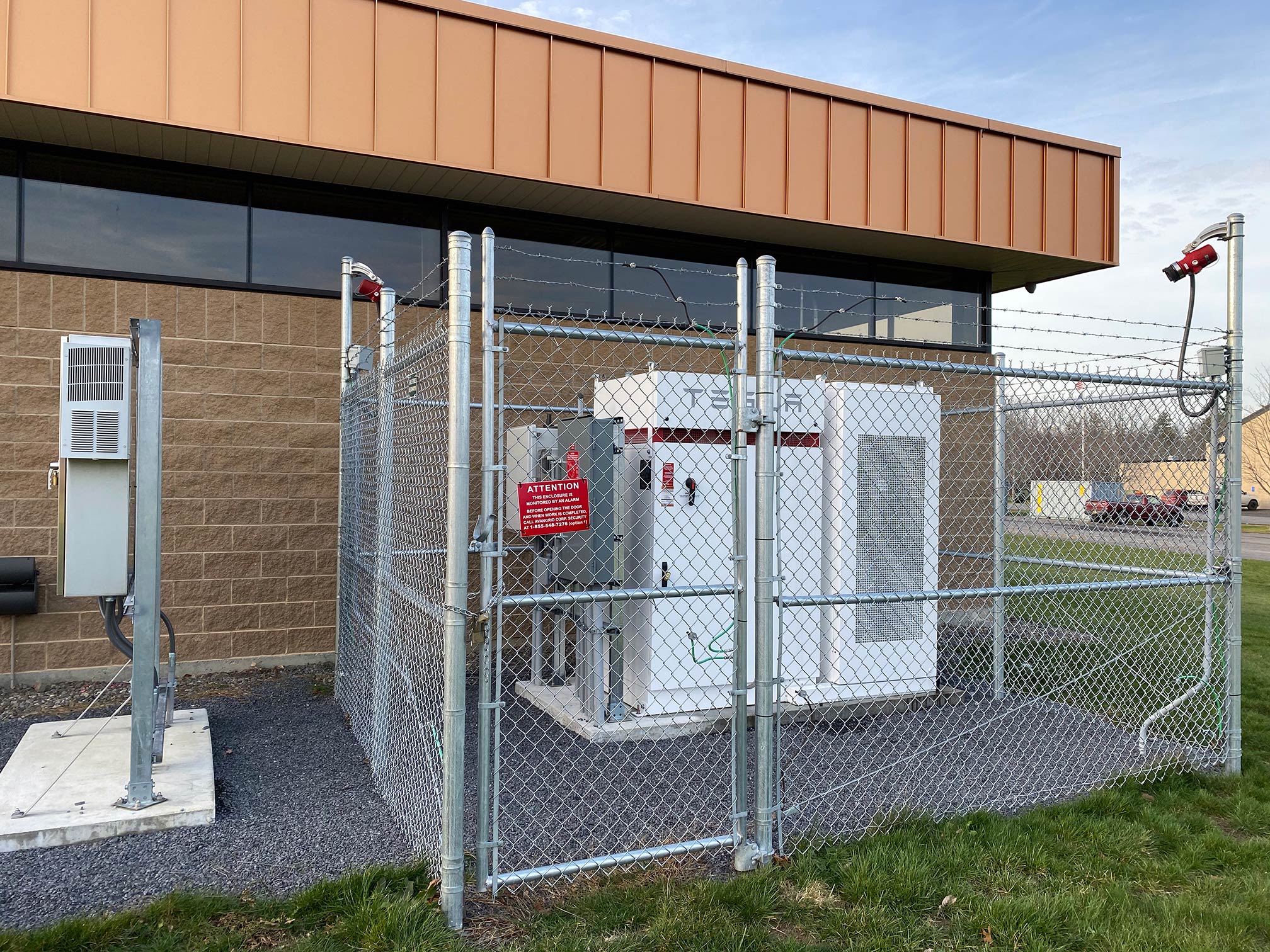
Aggregated Behind-the-Meter Energy Storage Project, Ithaca NY
As part of the Behind-the-Meter project, we’ve installed six commercial energy storage facilities of varying sizes behind the meter on customers’ properties. We approached this project with the goal of developing an increased understanding of how energy storage can support individual customers as well as the needs of the electric distribution grid.
This project is part of our efforts to support New York’s Reforming the Energy Vision (REV), which is the state’s initiative to build a clean, resilient and affordable energy system for all New Yorkers. We’re currently collecting data, evaluating lessons learned and reviewing best practices for the benefit of our customers and the electric grid.
Distribution Circuit Deployed Battery Storage System Pilot Project, Ithaca NY
Unlike the Behind-The-Meter Project which installed the energy storage system on a customer site, this project installed an energy storage system on an Ithaca, NY distribution circuit, which delivers power to customers’ homes and business. This pilot project seeks to evaluate and demonstrate the potential benefits of putting an energy storage battery in the middle of a distribution circuit.
This pilot is unique because instead of trying to solve a specific grid challenge, we’re simply exploring and testing the potential benefits that energy storage can provide. This allows us the flexibility to pursue a wide range of possibilities.
Overall, energy storage provides many new avenues for us to explore. These projects and demonstrations are helping us to not only discover, but also demonstrate which use of energy storage will most beneficial for our customers. Up next in our Energy Storage Blog Series, we’ll take a closer look at our innovative pilots and demonstrations taking place within RG&E’s service area.