
Heat Pumps: A Different Way to Heat and Cool Your Home

Share

A heat pump is a versatile, efficient cooling and heating system that has increased in popularity in recent years thanks to advancements in their technology and the many environmental benefits they provide. But what exactly is a heat pump? And how do they work?
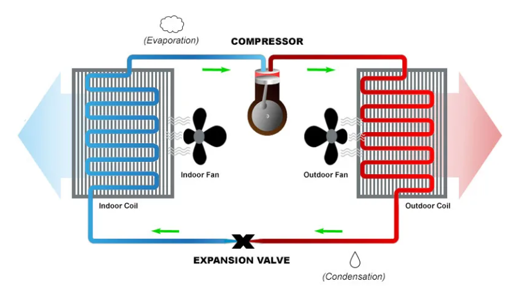
In the simplest terms, a heat pump transfers heat from one place to another. The system uses a variety of equipment to either heat or cool a home, including a compressor, reversing valve, fans and refrigeration coolant.
While heat pumps are sometimes viewed as new technology, they have actually been in the United States since the 1940s. In fact, they’re installed in more than 12 million US homes. Heat pumps first became popular in the 1970s, but these earlier generation models didn’t work well in extremely cold weather like we experience in New York. That changed in recent decades when Cold Climate Heat Pumps emerged.
How Do Heat Pumps Work?
Unlike natural gas furnaces that create heat, heat pumps transfer heat from one place to another. Modern heat pumps make this transfer of heat possible even in cold temperatures—cold climate heat pumps can handle weather into the negative teens and twenties.
There are two primary types of heat pumps:
- Air-source heat pumps warm our houses by extracting heat from the outside air and pumping it indoors.
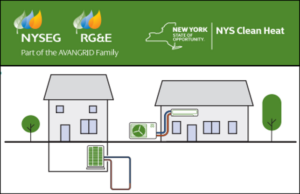
- Ground-source heat pumps – known as geothermal heat pumps – transfer heat between the air inside a home and the ground outside a home.
In both air- and ground-source heat pumps, air is blown over an evaporator coil, transferring heat energy from the air to the refrigerant. That heat energy is circulated in the refrigerant to a condenser coil, where it is released as a fan blows air across the coil. Through this process, heat is pumped from one place to another.
Heat Pump Benefits
Heat pumps provide a variety of benefits:
- Save on Energy Costs: Heat pumps provide warmth more efficiently than conventional oil, propane, or electric resistance heating systems. This can save you money on your energy bill.
- Cleaner, healthier, and safer: According to NYSERDA, conventional heating and cooling systems are responsible for 37 percent of energy consumption and 32 percent of greenhouse gas emissions in New York. Heat pumps are a cleaner alternative as there’s no combustion of fossil fuels, fuel storage, or carbon monoxide emissions associated with them.
- Energy Efficiency: Heat pumps are two to four times as efficient as conventional oil, propane, or electric resistance heating, and ground source heat pumps provide cooling much more efficiently than other cooling systems.
NYSEG and RG&E’s Heat Pump Programs
If you think that a heat pump might be the right fit for you and your family, NYSEG and RG&E have programs that offer incentives to convert your heating and cooling system.
The NYS Clean Heat Rebate Program offers rebates to our residential natural gas and electricity customers who install qualifying equipment by our participating contractors. These rebates range from $400 to more than $3,000 depending on the equipment you chose. Additionally, we work with a network of contractors to help streamline the rebate process by taking the rebate amount directly off the price of the heat pump. To learn more, click here for NYSEG and here for RG&E.
We also offer a partnership with Sealed through their Climate Control plan to help make your house more comfortable and energy-efficient, which includes assessing your heating and cooling system. Sealed will assess your energy bill to find wasted energy and then will coordinate and cover the upfront cost of the work. The resulting energy savings in your bill will be used to pay for the work. Find out if you qualify by clicking here for NYSEG and here for RG&E.